Colossal enemy battles
This is the only fight type with a documented win condition that is not 'reduce HP to zero'. The morale gauge is the thing to understand.
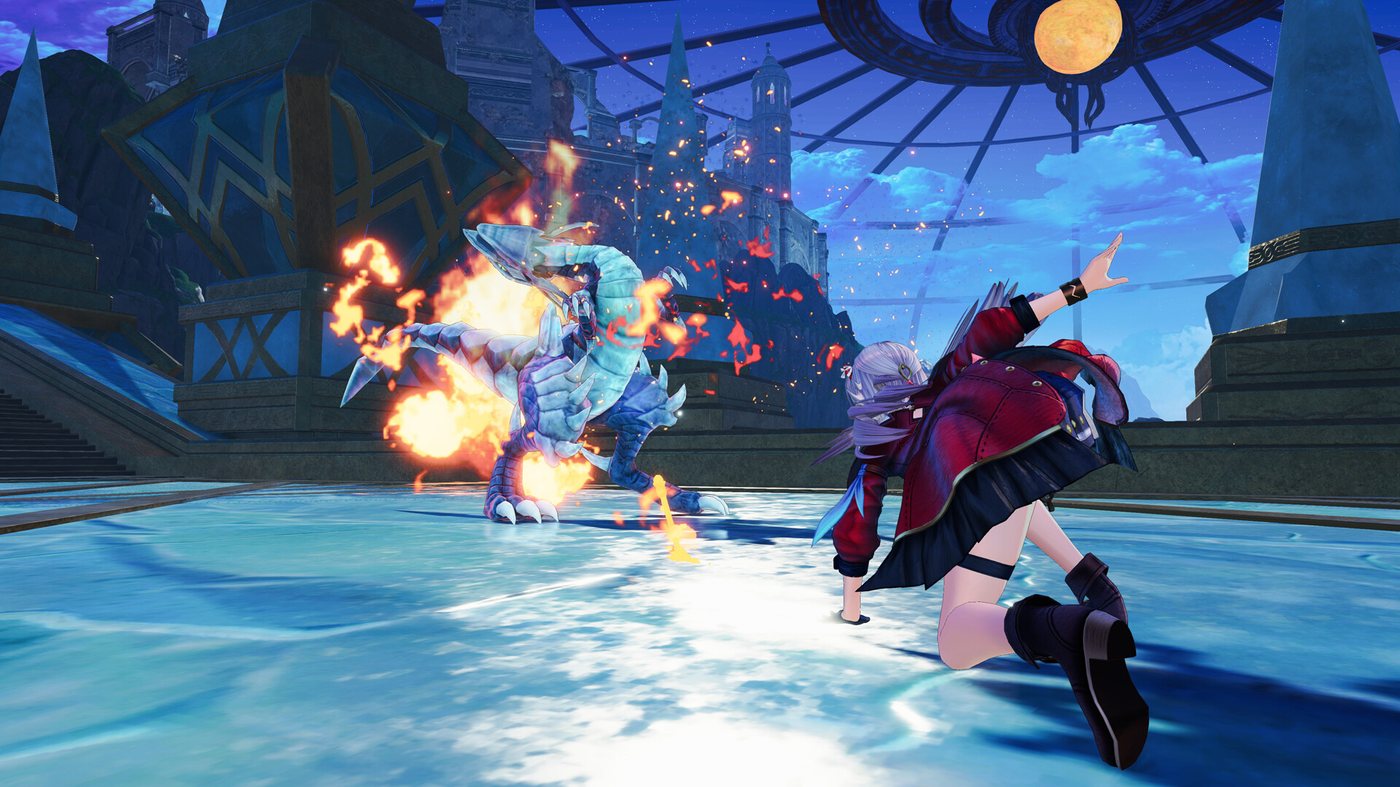
Colossal fights run in two phases: a frontline team fights the creature directly while an assault team uses cannons and structures to support them. Completing each phase's objective drains the enemy's morale gauge, and emptying it wins the fight.
Colossal enemy fights are the one announced battle type in Atelier Karia with a win condition other than "reduce HP to zero". Instead of a health bar, you drain a morale gauge by completing phase objectives with two separate teams.
This is the fight structure most worth understanding before launch, because it changes what "good at combat" means.
The two-team structure
The party splits:
| Team | Job | How it plays |
|---|---|---|
| Frontline team | Take on the colossal enemy directly | Direct engagement with the creature |
| Assault team | Control the battlefield | Uses cannons and other structures to support the frontline |
The official framing is that coordination is the key to victory. That is not flavour text — it follows from the gauge mechanics. If only one team can meaningfully reduce morale at a time, then splitting attention badly means the gauge does not move.
The morale gauge
The mechanic, as published:
- Each phase has an objective.
- Completing the objective reduces the enemy's morale gauge.
- Depleting the morale gauge wins the fight.
So morale is a race, not a health pool. That has a specific consequence: damage output is only useful insofar as it completes objectives. A build optimised for raw DPS may be worse than a build optimised for finishing phase objectives quickly, because the gauge does not care about damage numbers.
This is also why the style system matters here. Styles trade damage types against new weaknesses. In a morale fight, the question is not "which style does more damage" but "which style finishes this phase's objective".
Support structures
According to the official material, support structures become available after completing secondary objectives. They are described as powerful, and the framing is that they can help you claim victory.
That creates a deliberate tension in the fight:
| Choice | Cost | Reward |
|---|---|---|
| Chase the primary objective | Faster gauge progress now | No support structures |
| Do secondary objectives first | Time spent not draining the gauge | Powerful support tools for later phases |
If a fight has multiple phases and the structures persist, doing secondaries early is the stronger play. If structures only help within a phase, the calculation flips. The official material does not state which, so this is the first thing to test at launch.
Why this fight type exists
Look at the three combat pillars announced together:
- Real-time action battles with parrying and countering, plus unique abilities per party member.
- Style changes that alter damage type, range and weakness.
- Colossal fights that split the party and use a morale gauge.
The first two are standard action-RPG depth. The third is the structural addition, and it explains why the party is large — you need enough characters to staff two teams with distinct jobs. That also means the thirteen-character roster is not just story dressing; some of it is staffing.
Practical preparation
| What to prepare | Why |
|---|---|
| Two viable teams, not one optimised party | The fight splits your roster |
| Familiarity with parry timing | Parrying and countering are named as core mechanics |
| At least one style with a traversal ability | Assault phase involves moving around the battlefield |
| Willingness to do secondaries | Support structures unlock from secondary objectives |
The first row is the one people will get wrong. Atelier players are used to building one strong party of front-liners. A fight that splits the party punishes that, and the fix is levelling breadth rather than depth.
What is not published
- How many phases a colossal fight has, and whether objectives carry over.
- Whether you choose the team split or the game assigns it.
- Whether the morale gauge regenerates, and whether it can be refilled by the enemy.
- Whether colossal fights are story-mandatory or optional.
- What happens if a team is defeated — full loss, or a phase reset.
None of that has been documented. It is listed here so that launch-week guides making confident claims about it can be evaluated rather than trusted.
The parry layer
The one detail worth extracting from the general combat description: parrying and countering are named explicitly, alongside a note that each party character has unique abilities.
Parry systems in action RPGs usually mean two things — a timing window that rewards aggression, and a punish state for missing. Combined with a morale gauge, that suggests the intended loop is: parry to create an opening, use the opening to complete the phase objective, watch morale drop. Whether it works that way is unverified, but it is the reading the published pieces support.