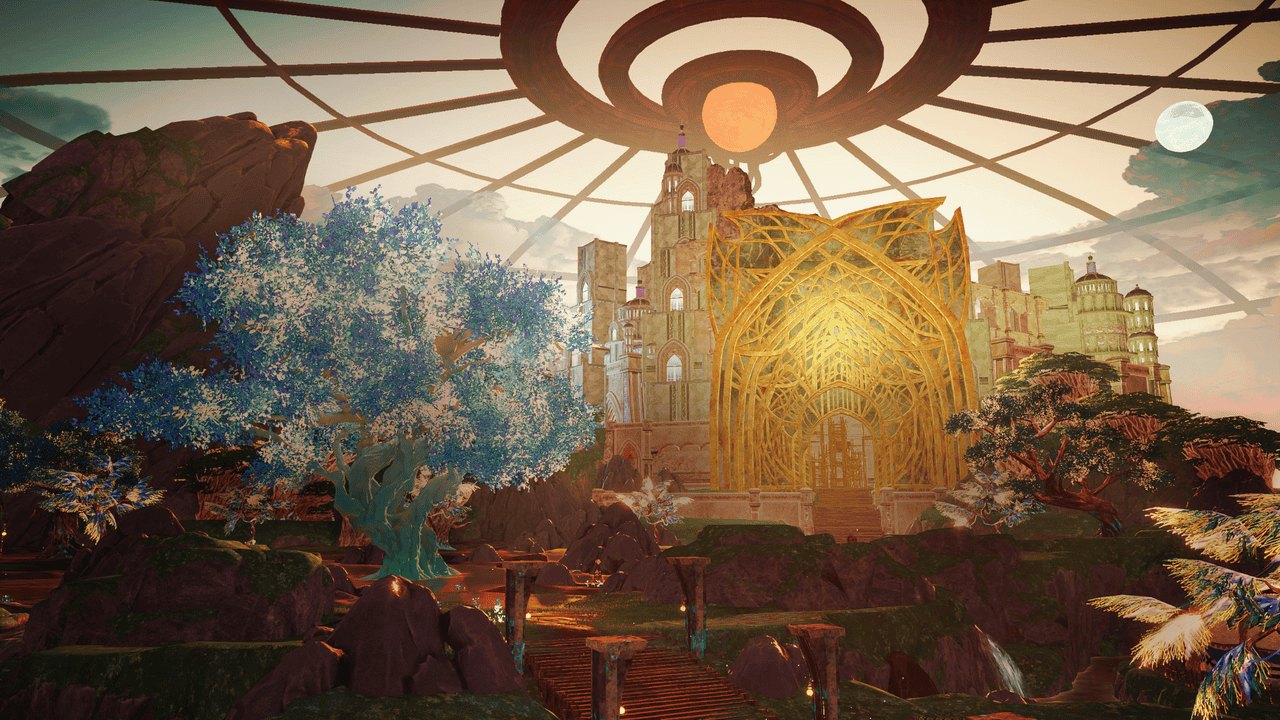
Synthesis: mana pieces and lines
This is the single biggest mechanical change from Atelier Yumia, and the official material describes it in one sentence. Here is what that sentence implies in practice.
Recipes in this game contain mana pieces and lines. Which pieces you use, and how you connect them, changes the properties of the item you make — so the same recipe can output different items.
Synthesis is the system Atelier Karia changes most, and the change is described in a single sentence on the store page: recipes contain mana pieces and lines, and the pieces you use plus the ways you connect them alter the properties of the items you synthesize.
That sentence does a lot of work. Here is what it implies, and where the implications stop being sourced.
What a mana-line board changes
In previous Atelier entries, a recipe is largely a container: you put ingredients in, quality and traits flow through, and the output is deterministic given the inputs. Optimization is about ingredient quality and trait transfer.
A board of pieces and connecting lines changes that in three ways:
- Layout becomes an input. If connecting lines matter, then the topology of the board is as important as the materials. Two players with identical ingredients can get different items.
- The output is not a single fixed item. The store page says the properties of the synthesized item change, not that the item changes tier. That distinction matters: you may be shaping affixes or effects rather than swapping the item itself.
- Experimentation has a cost and a reward. Trying a different connection path consumes materials, but it is the only way to learn which topologies produce which properties.
That third point is why the eating system and synthesis are the same loop rather than two systems. If a synthesis attempt produces a variant item, and Karia can eat items, then a failed experiment is still an input to form discovery.
How this differs from Atelier Yumia
| Atelier Yumia | Atelier Karia | |
|---|---|---|
| Core synthesis idea | Item building with materials and traits | Mana pieces plus connecting lines |
| Determinism | Output largely fixed by inputs | Output properties altered by piece/line layout |
| Failure cost | Lower-value item | A variant item that may still be edible |
| Cross-system link | Crafting feeds combat | Crafting feeds combat and form unlocks |
The last row is the structural difference. In Yumia, a bad craft is a wasted craft. Here, a bad craft is possibly a new snack, and a new snack is possibly a new form. That softens the punishment for experimenting, which suggests the design intends for you to experiment.
What synthesis feeds
The store page lists three uses for synthesized items, and they are broader than combat:
- Battle items — the classic use, bombs and support items.
- Exploration tools — synthesized items now break walls and open paths. The official site states items play a new key role in systems beyond combat.
- Meals — cooked food feeds the friendship and buff system.
So a synthesis decision is a decision about which of three sinks you are feeding. If you are stuck in exploration, the answer may be a synthesis problem rather than a combat problem.
Practical implications before launch
Three habits worth forming, based on what is published:
| Habit | Reason |
|---|---|
| Keep a stock of low-value ingredients for topology experiments | Learning which connections do what costs materials |
| Do not discard variant outputs | A variant item may be edible, and eating is progression |
| Check whether an obstacle is a synthesis problem | Items now open paths during exploration |
What is not published
Being specific about the gaps here is more useful than a confident guess:
- Number of mana piece types and whether they are tiered.
- Whether line connections have a limited count per recipe or per item tier.
- Whether trait transfer from ingredients still exists alongside the new board.
- Whether the board differs per recipe category (battle items vs food vs accessories are likely to differ).
Everything above is described from the store page and the official feature list. No playtesting claim is being made — the game is not out.